
Teenagers and Sleep: Why the Body Clock Shifts (and How to Work With It)


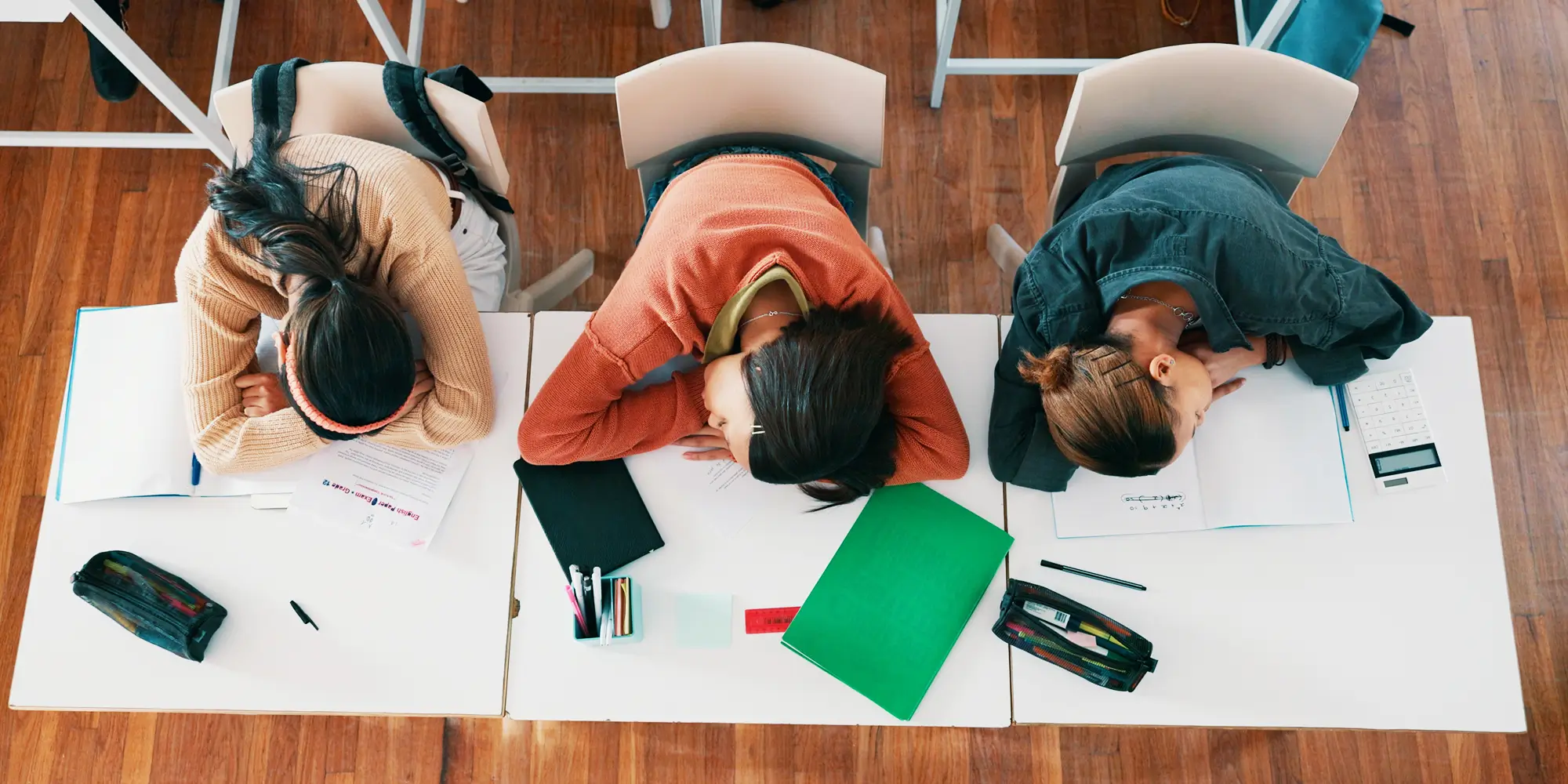
If your teenager seems exhausted all day and somehow wide awake at midnight, you are not imagining it. It is not simply laziness, too much screen time or poor habits. Something biological is going on underneath.
The scene is familiar to most parents of teenagers. Your teen can barely lift their head off the pillow for school, drags through the morning, and somehow comes fully alive at half past ten at night. During the teenage years, the body clock genuinely shifts later. Many teens do not feel sleepy until much later in the evening, even when their bodies badly need the rest. And it happens at the exact stage of life when school, homework, exams, sport, jobs, friendships and social pressure are all piling on at once. Their biology is pushing them later at the exact point life starts asking more of them.
Why the Teenage Body Clock Shifts
Your body runs on a circadian rhythm, an internal 24-hour clock that helps decide when you feel alert and when you feel sleepy. During puberty, that clock naturally moves later. Melatonin, the hormone that signals “it is night now,” begins to release later in the evening for teenagers than it did when they were younger children. In simple terms, a teenager often does not feel tired at the same time a younger sibling or a parent does. Many will not feel genuinely sleepy until closer to 11pm or midnight.
The trouble is that school timetables have not shifted to match. So while a teenager’s body wants to sleep later into the morning, the alarm is still going off at 6 or 7am. Sleep researcher Dr. Mary Carskadon described this as a “perfect storm”: the biological delay, the rising demands of teenage life, and early school start times all colliding at once. Researchers sometimes call the result “social jet lag,” when the body’s internal timing and the demands of daily life are constantly out of sync.
How Much Sleep Does a Teenager Need?
Teenagers aged 13 to 18 need around 8 to 10 hours of sleep a night. That recommendation is well established across the sleep science community.
Yet most adolescents fall short, particularly on school nights. Research shows more than 7 in 10 high schoolers regularly miss the mark. This is not simply about being moody in the mornings. Sleep shapes learning, memory, mood, mental health, sporting performance and even safety behind the wheel for young drivers. It matters far more than most parents realize. A lot of teenagers are quietly functioning exhausted."
Why “Just Go to Bed Earlier” Doesn’t Work
Parents often ask the obvious question: if they are this tired, why can’t they just go to sleep earlier? But sleep does not respond to force. It responds to two things working together: timing and sleep pressure.
Sleep pressure is the natural build-up of tiredness across the day. The longer we are awake, and the more the brain takes in through movement, light and the senses, the more pressure builds until sleep finally arrives. In my work, I describe this as the Sleep Balloon. It slowly fills throughout the day with everything the brain experiences, and a full balloon makes sleep come more naturally. A half-filled one does not.
Modern teenage life interferes with both systems. Late-night scrolling, irregular schedules, long indoor and sedentary days, stress and constant notifications all push the brain’s “time to sleep” signal even later. A teenager can be genuinely exhausted and still feel switched on at night, because the timing signal and the sleep pressure have simply not arrived together.
Why Phones Are the Real Sleep Problem (and It’s Not the Blue Light)
If you only change one thing about your teenager’s evening, change the phone. Blue light gets the headlines, but the bigger issue is what scrolling does to the brain’s reward system.
Every scroll, like, notification or new video is what behavioral scientists call a variable reward. You do not know what you are going to get next, and that uncertainty is exactly what triggers dopamine, the chemical that drives motivation and the “keep going” feeling. It is the same mechanism that makes a slot machine compelling. It is part of why “just five minutes on the phone” so rarely stays five minutes.
For teenagers, this is amplified twice over. The adolescent brain’s reward system runs hotter than it ever will again, responding more strongly to social rewards than the adult brain. At the same time, the prefrontal cortex, the part that says “okay, that’s enough, put it down,” is not fully developed until the mid-twenties. So you have a brain wired for maximum sensitivity and minimum impulse control, holding a device specifically designed to keep attention for as long as possible.
And dopamine is a wake-promoting neurotransmitter. It tells the brain “stay alert, this is worth paying attention to,” which is the opposite of what needs to happen for sleep to arrive. A teenager who picks up their phone “for five minutes” before bed easily loses an hour.
Sleep Is a Daytime Issue®
One of the biggest misconceptions about teenage sleep is that the problem begins at bedtime. It does not. What a teenager does during the day has a powerful effect on how well they sleep that night.
Morning light matters enormously. Natural light in the first hour after waking helps anchor the body clock and tells the brain clearly that the day has started. Movement matters too, because activity helps build healthy sleep pressure. So does sensory variety, whether that is time outdoors, a change in temperature, laughter or real connection. A teenager who moves from a dark bedroom to an indoor classroom to a screen-lit evening is getting very little of the daytime signal their clock depends on. Most of how well a teenager sleeps tonight was decided earlier today.
The Back-to-School Body Clock
This is why teenage sleep often feels hardest at certain points in the year. Over the summer break, with looser routines and later social evenings, many teenagers naturally drift towards later nights and later mornings. Their body clock drifts with them.
Then school begins, almost overnight, with early alarms and structured mornings. The body clock does not adjust instantly, so the first few weeks back can feel like travelling across time zones every day. Teens may seem unusually tired, emotional or hard to wake, not because they are being difficult, but because their biology is still catching up. The gentlest fix is a gradual one: shifting bedtime and wake time earlier by 15 to 20 minutes every few days in the week or two before school or exam season begins.
How to Work With a Teenager’s Body Clock
The goal is not a rigid schedule or a nightly battle. It is helping the body clock work with biology rather than against it.
Let the sun do the work for you.
Before you try to wake them, open the shades. Light is one of the strongest morning signals the brain has, so let it do the heavy lifting. Bonus: any morning grumpiness gets aimed at the sun, not at you. Then help their Sleep Balloon start filling by waking their senses a few minutes before you go in. The food you are making, the coffee you are brewing, or simply switching off the fan or noise machine they slept with so their environment senses something different. Their brain starts to register that the day has begun, and they begin waking up well before you have to try to wake them up.
Keep wake-up times fairly steady.
Large swings between weekdays and weekends worsen social jet lag. Aim to keep weekend wake times within about two hours of school days. Sleeping in until noon feels wonderful, but it quietly pushes the clock later by Sunday night.
Encourage movement earlier in the day.
Activity strengthens sleep pressure and tends to improve sleep quality. Earlier movement supports sleep far better than intense activity late at night.
Soften light and screens in the evening.
This does not mean a teenager has to sit in the dark after dinner. But dimmer lighting and less late scrolling help the brain recognize that night is on its way.
Don’t let the bed become a stress zone.
When a teenager lies awake and frustrated night after night, the brain can start to link the bed with stress rather than sleep. If they are wide awake for a long stretch, a calm, low-light activity until sleepiness returns is far better than lying there willing it to happen.
Your Teenager’s Bedroom Matters Too
Teenagers are moving through growth spurts, sports, exam stress and constant change, and their bedroom should support all of it. A room that is cool, dark, quiet and genuinely comfortable makes uninterrupted sleep far more likely. Temperature, breathable bedding and proper support all matter more than many families realize.
Many teenagers are still sleeping on mattresses chosen years earlier, when their bodies were much smaller and their sleep needs looked completely different. Adolescent bodies grow fast and do a lot of overnight repair work, and the bed underneath them should keep up.
A good mattress will not fix a shifted body clock. But when a teenager is already fighting biology to get up at 6am, an uncomfortable bed only makes things worse. Sometimes improving sleep is not about adding another rule or taking something away. Sometimes it is about looking more closely at the environment they are spending nearly a third of their life in every night.
The Bigger Picture
Teenagers are often criticized for sleeping late, struggling in the mornings and wanting more rest. But much of what we label as “teenage behavior” is really biology meeting modern schedules. That does not mean structure stops mattering, because it absolutely does. It means we can respond with a little more understanding and a little less shame.
Most teenagers are not trying to be difficult. Their brains are running on a different biological timetable for a few important years. Support that rhythm instead of fighting it, and mornings get easier, moods steady, focus improves, and sleep starts to feel less like a nightly battle.
References:
- American Academy of Sleep Medicine
- Centers for Disease Control and Prevention
- NHS sleep guidance for children and young people
- The Sleep Foundation
- The Sleep Charity, Teen Sleep Hub
- Carskadon, M.A. Sleep in Adolescents: The Perfect Storm. Pediatric Clinics of North America.
- Crowley, S.J. et al. Sleep timing and circadian phase across adolescence. PLoS ONE.
- Sherman, L.E. et al. The Power of the Like in Adolescence. Psychological Science.
About our Team
Licensed clinical psychologist Dr. Kimberly Ann Lemke is an internationally recognised expert on the science of sleep - through her groundbreaking Drift® Method, she helps people prevent fatigue and burnout by focusing on daily habits. She is an award-winning entrepreneur and author.
Related Articles
Sales Enquiries
Mon-Sat: 09:30am - 5:30pm
Sunday: 10am - 4pm
Customer Service
Mon-Sat: 09:30am - 5:30pm
Sunday: Closed
customerservice@mattressonline.co.uk