

What Is a Contract Mattress and Bed?


Contract beds and mattresses are built specifically for commercial spaces, from hotels and B&Bs to student housing, where safety, durability and guest comfort are paramount.
If you are a landlord who is trying to figure out what contract beds and mattresses are and who they are for, you have come to the right place.
These beds and mattresses are built to withstand heavy and frequent use while complying with UK fire and safety regulations. Contract mattresses and beds in the UK pass the BS7177:2008 Source 5 - Medium Hazard (Crib 5) test, which requires the bed and mattress to resist catching fire or self-extinguish quickly without spreading flames.
I’m Hannah Shore, Head of Sleep Science, and in this guide, I’ll explain contract beds and mattresses to help you understand where they are needed.

What’s the difference between domestic and contract mattresses and beds?
Whilst domestic mattresses and contract mattresses are designed to offer long-lasting comfort and great support, there are some key differences to be aware of.
Domestic mattresses and beds are made for general use in homes. This means they are designed with one or two users in mind and with less strict fire safety regulations.
Below is a quick overview:
| Domestic mattresses & beds | Contract mattresses & beds |
| Designed for personal, at-home use | Built for commercial settings (hotels, B&Bs, student accommodation) |
| Intended for use by the same people over long periods | Made to withstand frequent, heavy use from multiple guests |
| Focus on personalised comfort and individual sleep needs | Designed to offer generic comfort and support suitable for most sleepers |
| Wide choice of firmness levels, fillings and support systems | Standardised firmness, fillings and support systems to suit a variety of sleepers |
| Meet standard domestic fire safety regulations | Comply with BS7177:2008 Source 5 (Crib 5) fire safety requirements, or above |
Contract mattresses will also often feature additional treatments, such as anti-bed bug protection, to help keep your guests safe.
Who needs to use contract beds and mattresses?
It's recommended that you use contract beds and mattresses in all commercial, hospitality and public-facing properties to ensure fire safety regulations are met.
You’ll typically find contract-grade mattresses in:
- A hotel, B&B or guest house
- Student accommodation or boarding facilities
- A holiday park or camp
- A hostel or youth hostel
- A care home
- Any public building or healthcare setting
If your business welcomes paying visitors, long-term residents, contract beds offer the durability needed for repeated guest use.
Do I need a contract mattress for my business?
If you operate any kind of commercial or guest-facing property, it’s strongly recommended that you use contract-grade, Crib 5 tested mattresses under the UK Furniture and Furnishings (Fire) (Safety) Regulations 1988[1] act.
There isn’t a law naming every setting that must use contract mattresses, but you are legally responsible for ensuring your furniture meets fire safety requirements recommended for your property, as outlined in your risk assessment.
In practice, that means contract and Crib 5 mattresses are the safest and most compliant choice for hotels, guest houses, B&Bs, student accommodation, care facilities and any property with paying guests.
If you buy a standard domestic mattress instead of a contract mattress, you should ensure that the mattress is included in the property's robust risk assessment. Even with a detailed risk assessment, insurers may not cover you if there’s a fire or emergency and the mattress isn’t Crib 5 compliant. That can lead to invalidated insurance claims, fines and personal liability.
If you’re unsure which fire regulations apply to your property, your local fire officer can give you guidance on what you need to meet. They can advise on best practice, but the responsibility for compliance always sits with you as the property owner.
Contract mattress and bed size guide
When purchasing a contract mattress and bed, it is important to make sure you are utilising your space correctly. Choosing the right size for your guests or tenants will optimise their experience.
My top tip when shopping for contract beds and mattresses is to always choose the largest size you can comfortably fit inside the room. Choosing a bigger size can minimise partner disturbance and help your guests sleep more comfortably.
While a smaller bed might make the room look more spacious, guests rarely comment on room size; they remember how well they slept. Prioritising a comfortable, appropriately sized mattress and bed is far more likely to lead to positive reviews and repeat bookings.
Here is a list of common contract mattress and bed sizes:
| Bed / Mattress Size | Imperial | Metric |
| European Single | 3' x 6'6" | 90cm x 200cm |
| European Double | 4'7" x 6'6" | 140cm x 200cm |
| European King | 5'3" x 6'6" | 160cm x 200cm |
| UK Single | 3' x 6'3" | 90cm x 190cm |
| UK Small double | 4' x 6'3" | 120cm x 190cm |
| UK Double | 4'6" x 6'3" | 135cm x 190cm |
| UK King size | 5' x 6'6" | 150cm x 200cm |
| UK Superking | 6' x 6'6" | 180cm x 200cm |
Choosing the right type of contract mattress
When choosing a contract mattress, there are some other important factors to consider. Understanding the different parts of a mattress and what they do will help you make the right choice.
- Support layer - supports the guest's posture whilst they sleep. Found in the core of the mattress, and provides the main firmness level of support.
- Comfort layer - this sits on top of the support layer within the mattress and provides the initial comfort feel. They can provide sleeper benefits such as added breathability and pressure-relieving qualities.
- Finishings - the surface of the mattress can either be smooth, softer touch microquilted or pulled tighter with tufts for a firmer finish feel. The top material is also where additional treatments are added for enhanced benefits.
Below I have created a pros and cons for different types of materials you can find in the support layer, comfort layer and finishings of a contract mattress to help you decide what is the best choice for your business.
Support layer materials
Contract mattresses with foam
High-density foams are a great support layer choice as they can provide a secure, firm feel.
| Benefits | Things to consider |
| Firmer, more universally supportive feel that suits a wide range of guests | Less ‘premium’ feel compared to springs, which some guests may expect |
| Durable structure to help maintain the mattress' shape | Lower breathability than open coil or pocket sprung support systems |
| Maintains shape well and resists long-term impressions | Can soften over time, giving you a different level of support throughout its lifetime |
| Typically cheaper than pocket sprung mattresses | Can soften over time giving you a different level of support throughout its lifetime |
Contract mattresses with springs

Pocket springs and open coil springs are the most common support systems in most contract mattresses.
They offer strong durability, good airflow and reliable support - all essential in commercial settings.
| Spring system | Benefits | Things to consider |
| Applies to both pocket springs and open coil springs | Steel springs provide long-lasting durability. | Airflow can vary depending on the comfort layers (e.g., less effective when paired with foam layers). |
| The gaps between springs improve airflow to help regulate heat and moisture | - | |
| Pocket springs | Each spring moves independently, giving guests adaptive, body-responsive support. | Usually more expensive than open-coil options. |
| Excellent at reducing partner disturbance, ideal for hospitality settings. | Heavier to move and rotate due to the higher amount of springs. | |
| Open coil springs | Cost-effective, making it good for large commercial setups. | Transfers more movement than pocket springs. |
| Even weight distribution across the entire mattress for consistent support. | Less responsive than pocket springs. |
Comfort layer materials
Contract mattresses with natural fillings
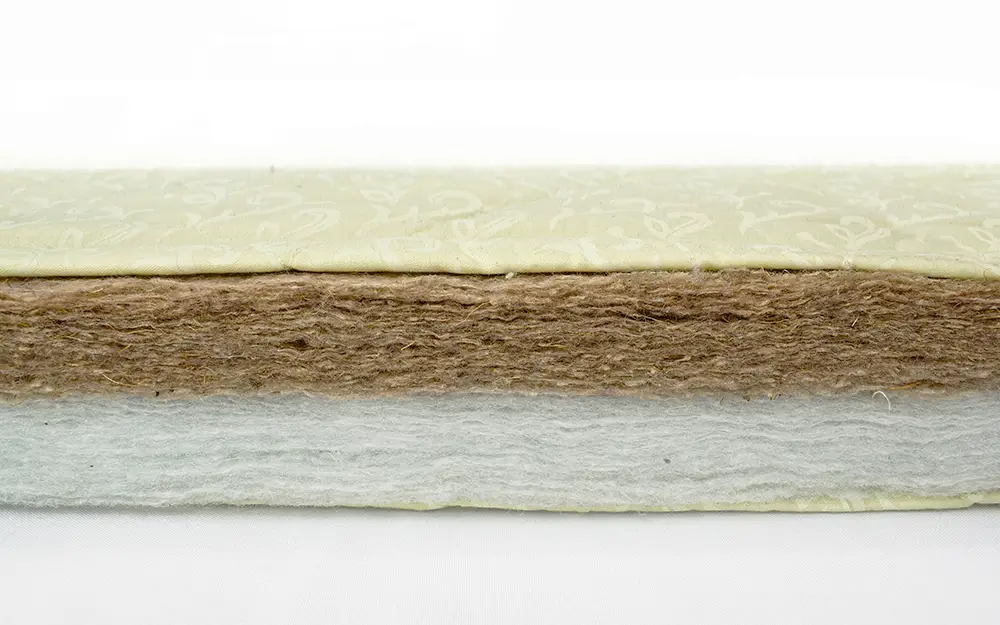
Natural fillings are found in the comfort layer of contract mattresses. These natural fibres often consist of wool, cotton, silk and hemp.
Each fibre type has a range of benefits:
| Benefits of natural filling mattresses | Considerations for natural filling mattresses |
| Highly breathable and good at regulating temperature for guests year-round | Natural fibres can settle or compress over time, which can cause sagging and uneven settlement towards the end of the mattress' life |
| Naturally antibacterial fibres, like hemp, support hygiene in high-turnover rooms | Some natural fibres retain moisture longer, meaning they may take more time to fully dry after deep cleaning, spills and between guests |
| Good moisture-wicking performance, helping guests stay cool and fresh | Usually more expensive upfront than synthetic mattress alternatives as they offer a more luxurious feel |
| Often naturally fire-resistant, reducing the need for chemical treatment (though some FR treatments may still be used) | Some can be heavy and may require more effort to rotate or move |
| Sustainable, glue-free constructions can make end-of-life recycling easier | - |
Contract mattresses with foam

Foam is a great comfort layer within a mattress, and there are many different types of foam contract mattresses available.
As a comfort layer, foam will offer a sink-in feel as it contours to your body. There are many types of comfort foams with a range of different benefits, including:
| Types of foam comfort layers | Benefits | Things to consider |
| Memory foam | Reacts with your body heat, so you sink into it the more you lay on it, which can restrict movements throughout the night. | Can retain heat more than other foams, which some guests may find warm. |
| Reduces partner disturbance, which is ideal for shared guest beds. | Contours to each sleeper for broad comfort appeal with great pressure relief, and helps to minimise partner disturbance. | |
| Gel foam | Offers similar pressure relief to memory foam but doesn't feel as warm as traditional memory foam. It also supports easier movement with bounce-back technology. | Still not as breathable as natural or polyester fibres, especially in warmer rooms. |
| Reacts with your body heat, so you sink into it the more you lie on it, which can restrict movements throughout the night. | It is more breathable than standard memory foam thanks to its open cell structure, giving you a more refreshed feeling. | |
| Latex foam | You sleep on top of this foam rather than in it, so it doesn't contour to your body as much as traditional memory foam. | Typically more costly than other foam mattress types. |
| Highly durable and resilient, and maintains shape well under frequent use. It has a more responsive, springy feel compared to memory foam. | Not all latex is fully natural; some blends may include synthetic materials, therefore reducing the natural properties/benefits. |
Contract mattresses with polyester fibres
Polyester fibres (often referred to as soft white fibres) are man-made with the goal of providing some of the benefits of natural fibres.
These benefits include:
| Benefits of polyester fibre mattresses | Things to consider |
| Breathable fibres help keep the mattress feeling fresh between guest stays. | Polyester fibres can flatten over time, leaving body impressions. |
| Polyester is quick-drying, making cleaning and guest turnaround easier. | Not as durable as some natural or foam alternatives. |
| Often made with recycled materials and are recyclable at the end of their life. | - |
Contract mattress finishings
Alongside the materials which your mattress is made out of, other features you may want to consider for your contract mattresses are:
- Microquilted surface - a quilted panel added to the top comfort layer, providing a smooth cushioned surface.
- Tufted surface - tufting is the technique of securing all layers of the mattress in place. This increases the stability and enhances a firmer feel.
- Bed bug treatment - Contract mattresses often include fabrics treated to deter bed bugs, which is essential in high-turnover environments like hotels or hostels. This helps protect both your guests and your property, and can save you from costly pest treatments and room closures.
- Antibacterial treatment - These treatments help stop the build-up of bacteria. They’re especially useful in shared accommodation or spaces with frequent guest changeovers, as they help maintain hygiene between cleans and extend the life of the mattress.
- Increased edge support - In commercial settings, mattresses are used for far more than sleeping - guests sit on the edge to dress, relax, or use the bed like a sofa. Strong edge support prevents sagging, gives guests more usable sleep space, reduces partner disturbance and helps the mattress last longer under heavy use.
Contract mattress firmness guide
Choosing the right firmness for a contract mattress is one of the most important decisions you’ll make. As your guests will all have different sleep preferences, the aim is to pick a firmness that works well for the majority of sleepers.
Here are the firmnesses I would recommend for commercial settings:
- Medium to firm
- Firm
These firmnesses are the most popular type we sell online, meaning they will suit most of your guests. Due to the materials used in contract mattress construction, we find that they tend to be on the firmer side, which reduces the chance of any sagging and settlement.
Choosing the right mattress firmness can be confusing, but you can check out our firmness guide for more in-depth information to make your decision easier.
Choosing the right contract bed
Choosing the right contract bed is just as important as choosing the right mattress.
One of the most common and reliable options in hospitality is the contract divan base. Here’s why it works well for commercial properties.
Contract divan beds
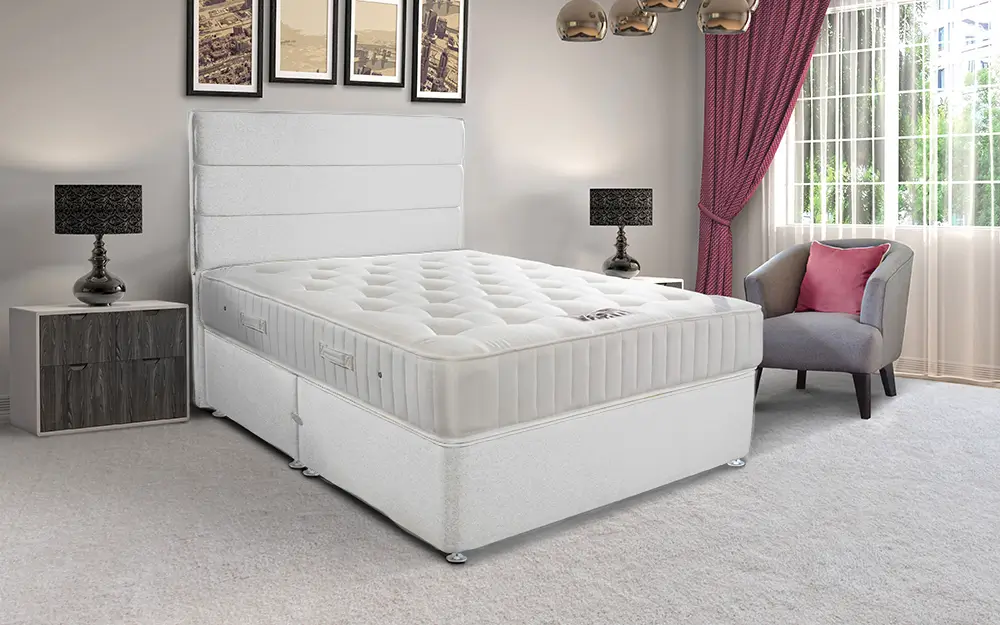
Divan bases are built from sturdy wood and designed as a hollow, supportive foundation for mattresses. There are many benefits for choosing a contract divan bed for your commercial property, including:
| Benefits of contract divan beds | Things to consider |
| Strong, durable construction that supports the mattress well and extends its lifespan | Usually more expensive than standard bed frames |
| Comes with many different optional space-saving storage designs | Can be difficult to move through tight hallways or staircases, as bases come pre-assembled in halves |
| Quick and easy to assemble, with clip-together halves and lockable castors for easy positioning |
Whether you run a hotel, student accommodation or a small B&B, choosing a contract mattress and bed is the safest and most reliable way to protect your guests - and your business. They're an investment in comfort, compliance and long-term peace of mind.
Ready to choose safe, compliant furniture for your business? Explore our contract-grade ranges:
For more expert guidance on compliance and product selection, visit the Trade Advice Hub.
References:
- The Furniture and Furnishings (Fire) (Safety) Regulations 1988 (no date) legislation.gov.uk. Available at: https://www.legislation.gov.uk/uksi/1988/1324/contents.
About our Team
 Fact Checked
A University of Oxford-trained sleep specialist and published researcher, Hannah's dedicated to improving your sleep through evidence-backed advice and product insights.
Sales Enquiries
Mon-Sat: 9:30am - 5:30pm
Sunday: 10am - 4pm
Customer Service
Mon-Sat: 09:30am - 17:30pm
Sunday: Closed
customerservice@mattressonline.co.uk


