

How Often Should A Landlord Replace A Mattress?


There’s no specific law that states when a landlord must replace a mattress, but there are clear signs and practical guidelines that can help you decide when it’s time for a change.
A well-maintained mattress doesn’t just support better sleep; it also helps protect tenant wellbeing, reduces complaints, supports hygiene standards, and prevents unnecessary maintenance or replacement costs. As a landlord, keeping the mattress in good condition is part of providing a safe and comfortable home.
I’m Hannah Shore, Head of Sleep Science, and in this guide I’ll walk you through the key factors to look out for, from wear and tear and hygiene concerns to tenancy turnover and usage patterns, so you can make confident, informed decisions about when to replace a mattress in your short- or long-term rental.
Short term rentals
Short-term rentals include holiday homes, serviced accommodation and other properties where tenants stay anywhere from a few nights up to six months.
As these beds experience frequent turnover, heavier use and generally less careful treatment than domestic mattresses, they tend to wear out faster.
On average, landlords can expect a well-maintained mattress in a short-term let to last around 6-7 years, compared with the typical 7-8 years for home use. This is a guideline rather than a strict rule, but it helps ensure you’re maintaining good hygiene, comfort and safety standards.
How can I make my short term rental landlord mattress last longer?
Below are practical steps you can take to extend the lifespan of your mattresses and reduce the need for early replacements.
1. Choose a contract-grade mattress
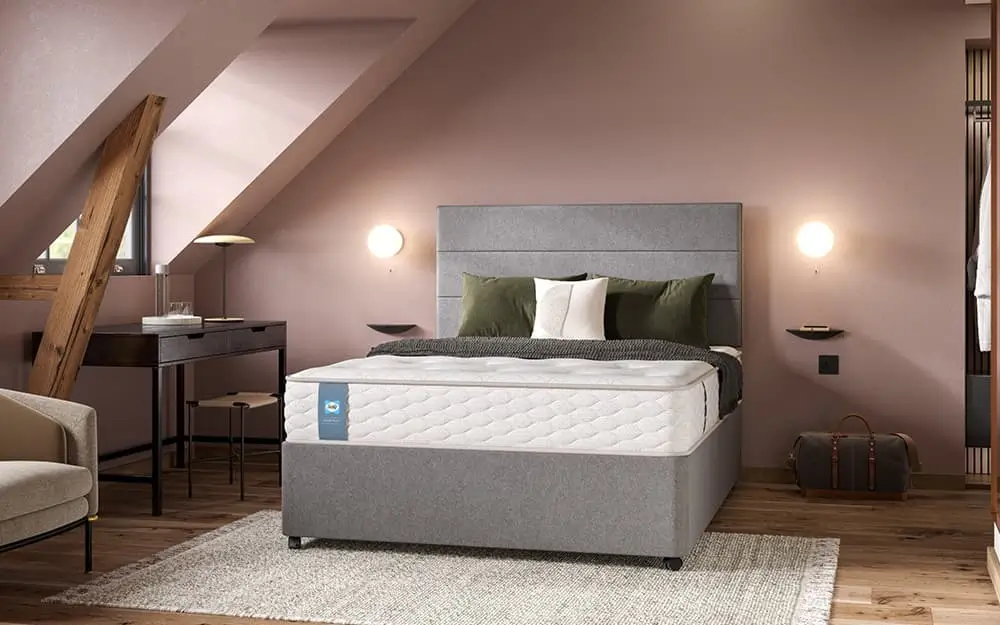
Contract mattresses are made for commercial use, meaning they offer stronger durability, greater structural stability and are designed to withstand frequent turnover and varying sleep needs.
They’re strongly recommended if you manage multiple short-term lets in a single building, such as apartments, student accommodation or serviced flats, as they adhere to stricter fire-safety standards. This can support compliance and reduce risk in the event of a fire.
While standalone holiday lets aren’t legally required to use contract mattresses, UK guidance under the UK Furniture and Furnishings (Fire) (Safety) Regulations 1988[1] highly recommends them. Their enhanced durability and fire performance make them a worthwhile upgrade for most landlords.
If you’d like to dig deeper into how contract mattresses work and the fire-safety standards they must meet, you can explore our related guides:
2. Use a high-quality mattress protector
With frequent tenant changeovers, hygiene becomes one of the biggest factors affecting a mattress’s lifespan. Spills, sweat, odours and general wear can all build up quickly.
A waterproof or washable mattress protector acts as the first line of defence, helping prevent deep-set stains, reducing moisture absorption and keeping the mattress cleaner for longer.
It’s also far cheaper to replace a protector than to replace a whole mattress prematurely, making waterproof mattress protectors a worthwhile investment.
3. Keep up with regular maintenance
Small, consistent care steps can significantly extend the lifespan of your landlord mattress:
- Rotate top-to-toe (single-sided mattresses) - monthly or seasonal rotating helps to minimise mattress settlement and keeps the comfort fillings evenly distributed.
- Flip and rotate (double-sided mattresses) - these mattresses need periodic flipping as well as rotating to help delay signs of ageing.
- Spot-clean promptly (if possible) - a quick check between tenants allows you to catch spills, stains or signs of wear early, helping you maintain hygiene standards and avoid long-term damage.
Long-term rentals
Long-term rentals include properties such as rented flats, houses and HMOs (House in Multiple Occupation), where tenants typically stay for a year or longer.
As these tenants treat the property as their home, mattresses usually receive lighter, more consistent use compared to short-term lets. This generally means less turnover, fewer spills or accidents, and better day-to-day care, all of which can help extend the lifespan of the mattress.
For long-term rentals, a good-quality mattress should typically be replaced every 6-8 years, provided it’s well maintained.
How can I make my long-term rental mattress last longer?
A landlord mattress in a long-term rental shouldn’t need replacing before the 6-8 year mark, but taking a few simple steps can help it reach that full lifespan.
Supply protective bedding
Because you won’t be cleaning or rotating the mattress yourself, like in short-term rentals, protective bedding does a lot of the heavy lifting.
Providing tenants with a waterproof mattress protector or high-quality mattress protector helps safeguard the mattress from spills, stains and general wear. This reduces long-term damage and helps keep the mattress fresher for longer.
How to choose a mattress for your rental property
One of the most effective ways to extend the lifespan of a landlord mattress is choosing the right construction from the start. Some materials and support systems naturally hold up better to regular use, tenant turnover and varying sleep habits.
Here’s what to prioritise when buying a new landlord mattress:
1. Pick a strong support system - Pocket springs and open-coil springs generally maintain their structure longer than foam support layers, helping the mattress stay supportive over time.
2. Choose durable comfort layers - foam comfort layers are more resistant to early sagging compared to fibre comfort layers.
3. If opting for fibre fillings, look for mini-springs - Mini spring units stabilise natural and polyester fibres, which helps to slow down settlement.
4. Look at build quality, not just price - Higher-density foams, quality spring units and well-made covers offer better longevity than higher price tags alone.
5. Consider contract-grade options - Contract or Crib 5 mattresses are built for heavier use, making them a smart choice for furnished rentals.
Are landlords responsible for replacing mattresses in the UK?
There’s no specific law stating how often landlords must replace a mattress. However, you are responsible for ensuring anything you provide in a furnished property is safe, usable and in a reasonable condition.
Here’s the general rule of thumb:
- Unfurnished property - As a landlord, you’re not typically responsible for mattress replacement because you haven’t supplied one.
- Furnished property - As a landlord, you are typically responsible for keeping supplied items in good condition and replacing them when they’ve worn out through fair wear and tear.
But responsibility can vary, and the tenancy agreement should be your first point of reference, as the agreement overrides this advice.
What counts as fair wear and tear on a mattress?
Fair wear and tear is the natural decline of a mattress over time. This can include:
- Mild sagging or dips in the surface
- Loss of support
- Fading or discolouration from age
- Softening of foam or settlement of filling
If the mattress becomes uncomfortable due to gradual deterioration, it’s generally considered good practice for landlords to replace it, even if it still looks cosmetically fine.
What doesn’t count as wear and tear?
General wear and tear does not include damage caused by misuse, including:
- Stains
- Rips or tears
- Strong odours
- Burn marks
- Holes or structural damage
- Visible liquid damage
These issues are usually the tenant’s responsibility if your tenancy agreement states this clearly.
If you’re unsure whether sagging or early settlement is normal or a fault of the product, check when the mattress was purchased and refer to the guarantee or warranty booklet. Some issues may be covered by the manufacturer in the event of a fault.
How to check if a mattress has worn out
A quick assessment can help you understand whether the mattress has reached the end of its life or if damage has been caused by misuse.
You can:
- Remove all bedding and visually check for dips, unevenness or fabric wear
- Use a straight edge (like a broom handle) to measure how deep any indent is
- Ask tenants whether they feel a dip, roll into a hollow, or wake with new aches
- Check whether fillings have settled enough for springs to be felt
Both landlords and tenants can carry out these checks to decide whether replacement is reasonable.
Who pays for a replacement mattress?
As a general guide, if you’ve supplied the mattress as part of a furnished tenancy:
- Wear and tear - Typically considered the landlord’s responsibility to address, as it occurs naturally over time.
- Misuse or avoidable damage - Usually considered the tenant’s responsibility, depending on your tenancy agreement.
However, always follow what’s written in your tenancy agreement, as this overrides general guidance.
You may still choose to replace a landlord mattress you have supplied sooner if:
- It helps retain good tenants
- It has reached a reasonable age
- A newer mattress could improve comfort or minimise future complaints

Whichever party is responsible, it’s always good practice to:
- Take dated photos of the mattress at the very beginning and end of the tenancy
- Inspect mattresses once or twice a year in long-term tenancies
This protects both sides and makes conversations about damage or replacement much easier.
Should a landlord replace a stained mattress?
There’s no specific law that states who must replace a stained mattress, so the decision comes down to what’s written in your tenancy agreement.
However, many landlords use the following approach:
- Stains caused during the tenancy - Often considered the tenant’s responsibility. Depending on your agreement, this may mean covering the cost of a replacement or paying for professional mattress cleaning.
- Stains that were present before the tenancy- If you can show the mattress was already stained (e.g., through an inventory report or photos), the landlord would usually be responsible for replacing it.
These are general guidelines only. Always refer back to your tenancy agreement, as this overrides any informal rules.
When tenants may request a new mattress
Even with good maintenance, tenants may occasionally request a replacement mattress if they feel it has become uncomfortable, unsupportive, or unhygienic.
While you’re not legally required to replace a mattress on request, it’s good practice to assess the mattress, check for signs of wear and tear, and refer to your tenancy agreement before deciding.
Responding fairly to reasonable requests can also help with tenant satisfaction and long-term retention.
Ultimately, replacing your rental mattress doesn’t have to be complicated. With the right checks, good maintenance and a quality mattress to start with, you’ll know exactly when it’s time for a replacement.
Keeping your landlord mattresses in good condition not only protects your investment, but it also helps support tenant wellbeing, satisfaction and long-term retention.
If you're looking to replace your landlord mattress, we have the perfect range of contract products for you to choose from:
For more expert guidance and buying advice, visit the Trade Advice Hub.
References:
- The Furniture and Furnishings (Fire) (Safety) Regulations 1988 (no date) legislation.gov.uk. Available at: https://www.legislation.gov.uk/uksi/1988/1324/contents.
About our Team
 Fact Checked
A University of Oxford-trained sleep specialist and published researcher, Hannah's dedicated to improving your sleep through evidence-backed advice and product insights.
Sales Enquiries
Mon-Sat: 9:30am - 5:30pm
Sunday: 10am - 4pm
Customer Service
Mon-Sat: 09:30am - 17:30pm
Sunday: Closed
customerservice@mattressonline.co.uk


