




The Oxford English Dictionary certainly thinks so, defining a food coma as ‘the state of drowsiness or lethargy experienced after eating a large meal’. Scientists call it ‘postprandial somnolence’ – that unmistakable state of drowsiness when you put down your knife and fork.
I, for one, have undoubtedly experienced a ‘food coma’ on Christmas Day. After cooking and eating Christmas lunch, I tend to carry myself on a metaphorical stretcher to my own cosy bed for a festive snooze. The ultimate, luxurious Christmas treat!
What Causes It?
Historically, it was suggested that food comas were caused by blood flow being diverted to digestion, causing a reduction in blood flow to the brain and thus sleepiness. More recently, this has been challenged because maintaining the flow of the blood to the brain appears take priority in a wide range of physiological states[1].
Micronutrients
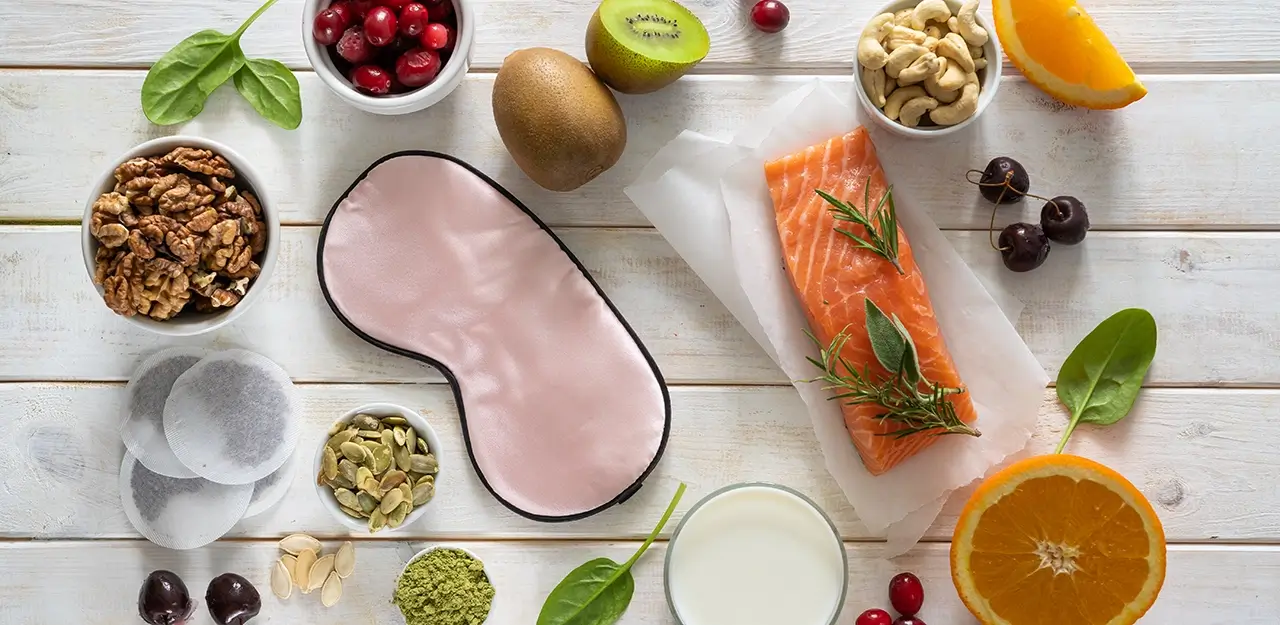
Foods containing the essential amino acid tryptophan may contribute to sleepiness after eating because it helps your body make melatonin and serotonin, both of which play roles in regulating sleep[2]. It’s found in abundance in turkey, nuts and cheese, i.e. Christmas dinner staples!
Eating carbohydrate with these foods (hello roast potatoes and Christmas pudding!) allows the brain to take up more of the amino acid tryptophan, possibly adding to that sleepy feeling[3].
Macronutrients
It is widely accepted that to function optimally, the body must maintain blood glucose levels within a certain range and levels either side of this range may cause lethargy and fatigue[4].
Meals high in carbohydrates and fried, fatty foods (a typical pattern on Christmas Day) are strongly linked to elevated blood glucose[5]. It makes sense that having eaten chocolate for breakfast, pastry canopés, plus many delicious roasties and dried fruit pudding, your blood sugar is likely to be rising fast and the pull of the sofa may feel overwhelming!
Fortunately, non-diabetic people have the ingenious mechanism of regulating high blood sugar, by secreting the hormone insulin into the blood. When blood glucose is particularly high, the insulin can bring it down rather dramatically, causing the blood sugar to crash to low levels. Even if it’s not clinical hypoglycaemia, lowered blood glucose may be associated with lethargy in the non-diabetic[6].
However, a recent review[7] suggested that further research into the relationship between sleepiness and blood glucose fluctuations is needed.
Gut Hormones
Gut hormones also play a role in the feeling of satisfaction and fullness after a meal. The hormone Cholecystokinin (CCK), for example, is released in response to fat or protein and is associated with fullness. Studies dating back almost 30 years[8] further suggest CCK is linked with a post meal slump/drowsiness, but more recent research has not fully clarified thus. GLP-1 is another hormone that associated with fullness; well known from the fat loss medications, they interestingly list drowsiness as a side effect.
Alcohol
Visiting the local pub on Christmas Eve (don’t you love it?!) is likely to mean less restorative sleep going into the big day itself, as alcohol can disturb sleep quality and cause dehydration, both of which are associated with fatigue. A boozy Christmas Eve is therefore likely to contribute to a snoozy Christmas Day.
The sedating effect of alcohol can make the slump even stronger, so if you compound last night’s drinks with a morning sherry, followed by ‘chef’s perks’ whilst cooking, topped off with copious amounts of wine with the meal, you’ve got the perfect recipe for an afternoon lie-down.
How to Reduce the Slump
Add Fibre: Great for the gut and digestion, it also slows the rate of sugar absorption into the blood, lessening the sugar rollercoaster effect. It is surprisingly filling, so you may be less likely to overeat sugary foods later. To increase fibre, try piling your plate with the wonderful, colourful veg on offer first, then balance the fatty, carb heavy roasties on top. There’s only so much room on your plate, and if most of it is veg, winner winner, turkey dinner.
Move a Little: Light intensity exercise after meals really helps balance the blood sugar, stimulates digestion and increases alertness, so a short stroll before your bottom hits the sofa could also be a good idea[9].
Keep Hydrated: If you want to remain more alert, try rehydrating throughout the day as much as possible. Perhaps serve sparkling water with wine at the table, or I can recommend drinking Yorkshire decaf tea (together with fizz) whilst cooking!
Cheers to that!
Christmas is not a time to be obsessing over nutrition; the social aspect and enjoyment of food is so important. Indeed, this is true every day of the year. On Christmas Day, if you throw yourself into a festive ‘food freedom’ mindset, it may be that an afternoon nap is just what you need to restore brain functionality [10]. So, if your bed or sofa is calling after your Christmas lunch, then consider embracing it and enjoy snuggling up!
References:
- 1. Bazar, K.A., A.J. Yun, and P.Y. Lee, Debunking a myth: neurohormonal and vagal modulation of sleep centers, not redistribution of blood flow, may account for postprandial somnolence. Med Hypotheses, 2004. 63(5): p. 778-82.
- Afaghi, A., H. O'Connor, and C.M. Chow, High-glycemic-index carbohydrate meals shorten sleep onset. Am J Clin Nutr, 2007. 85(2): p. 426-30.
- Markus, C.R., Effects of carbohydrates on brain tryptophan availability and stress performance. Biol Psychol, 2007. 76(1-2): p. 83-90.
- Kalra, S. and R. Sahay, Diabetes Fatigue Syndrome. Diabetes Ther, 2018. 9(4): p. 1421- 1429.
- Yao, J., et al., Diet, physical activity, and sleep in relation to postprandial glucose responses under free-living conditions: an intensive longitudinal observational study. Int J Behav Nutr Phys Act, 2024. 21(1): p. 142.
- Rayas, M.S. and M. Salehi, Non-Diabetic Hypoglycemia, in Endotext, K.R. Feingold, et al., Editors. 2000: South Dartmouth (MA).
- Kaneda, H., et al., The Influence of Food Intake and Blood Glucose on Postprandial Sleepiness and Work Productivity: A Scoping Review. Nutrients, 2025. 17(20).
- Wells, A.S., et al., Influences of fat and carbohydrate on postprandial sleepiness, mood, and hormones. Physiol Behav, 1997. 61(5): p. 679-86.
- Thirunavukkarasu, E., et al., Short-term effects of brief stair climbing interruptions on postprandial hyperglycemia during prolonged sitting: a randomized cross-over trial. Sci Rep, 2025. 15(1): p. 2329. 10. Slama, H., et al., Afternoon nap and bright light exposure improve cognitive flexibility post lunch. PLoS One, 2015. 10(5): p. e0125359.
About our Team
 Fact Checked
A Registered Nutritionist, Helen is passionate about helping people improve their health and wellbeing through practical, friendly and honest nutrition advice where nothing is off the menu.
Related Articles

Sales Enquiries
Mon-Sat: 9:30am - 5:30pm
Sunday: 10am - 4pm
Customer Service
Mon-Sat: 09:30am - 17:30pm
Sunday: Closed
customerservice@mattressonline.co.uk


